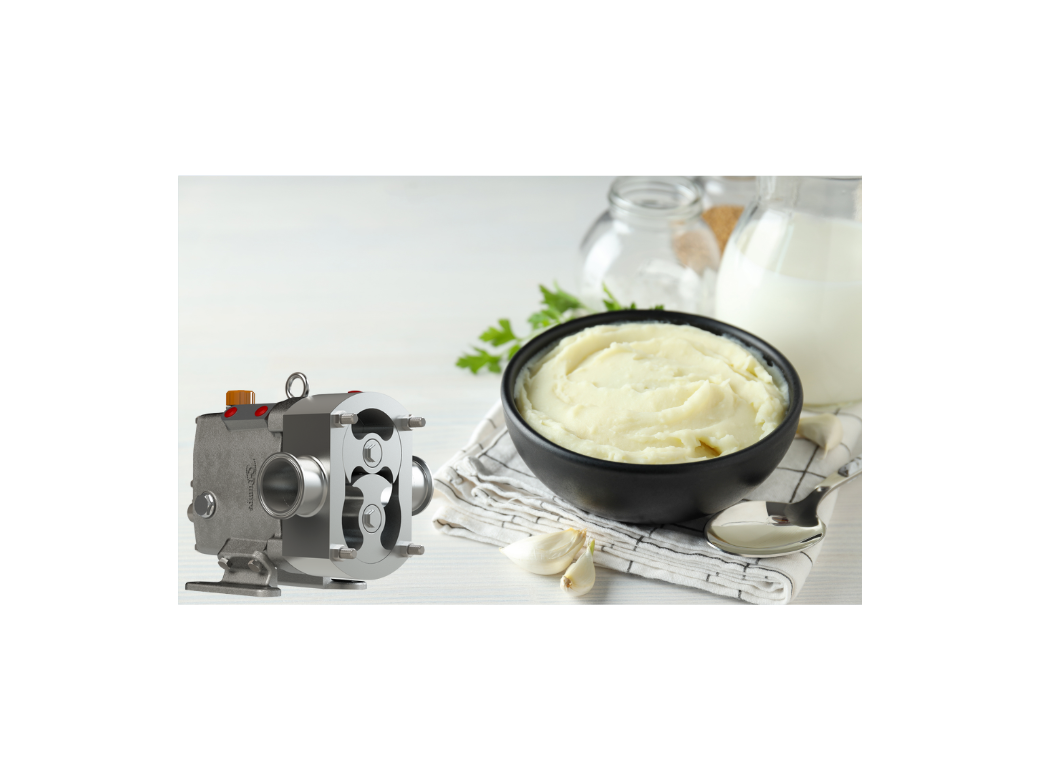
QL Lobe Pumps – the solution for pumping puree gently, preserving texture and quality.
QL Lobe Pumps for Fruit and Vegetable Puree: Care and Efficiency in Every Pump
In industrial puree processing, maintaining the texture, color, and quality of the product is a challenge only the right equipment can overcome. Whether it’s mango, strawberry, tomato puree, or vegetables like carrot or squash, each batch requires gentle, controlled transfer to avoid product degradation.
The QL Series from Q-Pumps offers the ideal solution to this challenge: lobe pumps specifically designed to handle high-viscosity, shear-sensitive products, ensuring hygienic, efficient pumping without compromising quality.
Why Choose Lobe Pumps for Fruit and Vegetable Puree?
Industrial puree is a delicate product:
- It has high viscosity, making it difficult to transport with conventional centrifugal pumps.
- It contains fibers, particles, or pulp that require gentle handling to avoid damage.
- It is sensitive to oxidation and temperature changes.
QL lobe pumps allow for a constant, controlled flow, ensuring the puree retains its natural texture, flavor, and nutritional properties from the mixing tank to the packaging stage.
How a QL Lobe Pump Works
QL positive displacement lobe pumps operate using two synchronized rotating lobes that do not touch each other. This motion creates cavities that move the product uniformly, without subjecting it to excessive friction or shear.
In the case of puree:
- They minimize aeration, preventing bubbles that could alter appearance or shelf life.
- They preserve the integrity of product particles and fibers.
- They maintain a stable flow, essential for high-precision filling and packaging processes.
Key Advantages of QL Lobe Pumps in Puree Pumping
- Transfer Without Quality Loss
Gentle pumping action protects the puree’s structure, avoiding particle breakage or texture changes.
- Operational Efficiency
High volumetric efficiency enables dense purees to be pumped without reducing flow rate, even in continuous high-volume processes.
- Total Hygiene
The sanitary design supports CIP (Clean in Place) and SIP (Sterilize in Place) cleaning, reducing downtime and ensuring compliance with international standards such as 3-A SSI and EHEDG.
- Versatility
Able to handle purees with or without fruit or vegetable chunks, adapting to production lines that require flexibility.
Specific Applications in the Puree Industry
QL lobe pumps are ideal for:
- Transfer from refiners or mixers to storage tanks.
- Feeding filling lines for containers, pouches, or jars.
- Mixing processes with inclusions such as fruit chunks in premium purees.
- Continuous production in juice and preserves plants.
Technical Features of the Q-Pumps QL Series
- Material: 316L stainless steel with electropolished finish.
- Continuous, pulse-free flow, ideal for sensitive applications.
- High resistance to solid particles found in purees with seeds or chunks.
- Sanitary mechanical seal to prevent leaks and protect the product.
- Easy maintenance with front access to the pumping chamber.
Factors to Consider Before Choosing a Lobe Pump for Puree
- Viscosity and density of the puree to be processed.
- Production volume and required pumping speed.
- Compatibility with inclusions such as seeds or chunks.
- Sanitary certifications required for your export market.
- Integration with your current cleaning system.
Discover how a QL Lobe Pump can optimize your puree production.
QL lobe pumps for fruit and vegetable puree not only ensure quality and consistency but also represent a strategic investment to increase efficiency, reduce waste, and meet the most demanding industry standards.
Learn more about the QL Series here
If you want, I can now integrate this translation into the full cluster in English with all cross-links between articles so it’s ready for publishing. Would you like me to do that next?